Dry Food vs Wet Food for Cats: How to Choose by Age, Weight, and Health
Choosing between dry and wet food is one of the first decisions a new cat owner faces, and it rarely stays simple. A playful kitten, a chunky eight-year-old, and a cat with a sensitive bladder can all share the same house and need different answers. The bowl in front of you matters more than any brand loyalty.
There is no single correct choice. What matters is moisture, protein, calories, cost, and how your particular cat eats — plus whatever your vet knows about your cat's health. Here is how to work through it without overthinking.
What Actually Differs Between Dry and Wet Food
Moisture
Dry kibble sits around ten percent water. Canned food is roughly three-quarters water, sometimes more. That gap is the biggest practical difference, because cats evolved as desert hunters and have a weak thirst drive. Many cats simply do not drink enough to compensate. If your cat rarely visits the water bowl, wet food quietly adds a significant amount of fluid to every meal.
Protein, fat, and carbohydrates
Labels are tricky here. Wet food looks low in protein until you compare the two on a dry-matter basis, which accounts for the water. Do that math and wet food often comes out ahead on animal protein and lower on carbohydrates, largely because kibble needs starch to hold its shape. That is not a reason to panic about dry food, but it is a reason to read the ingredient list rather than the front of the bag.
Calories and density
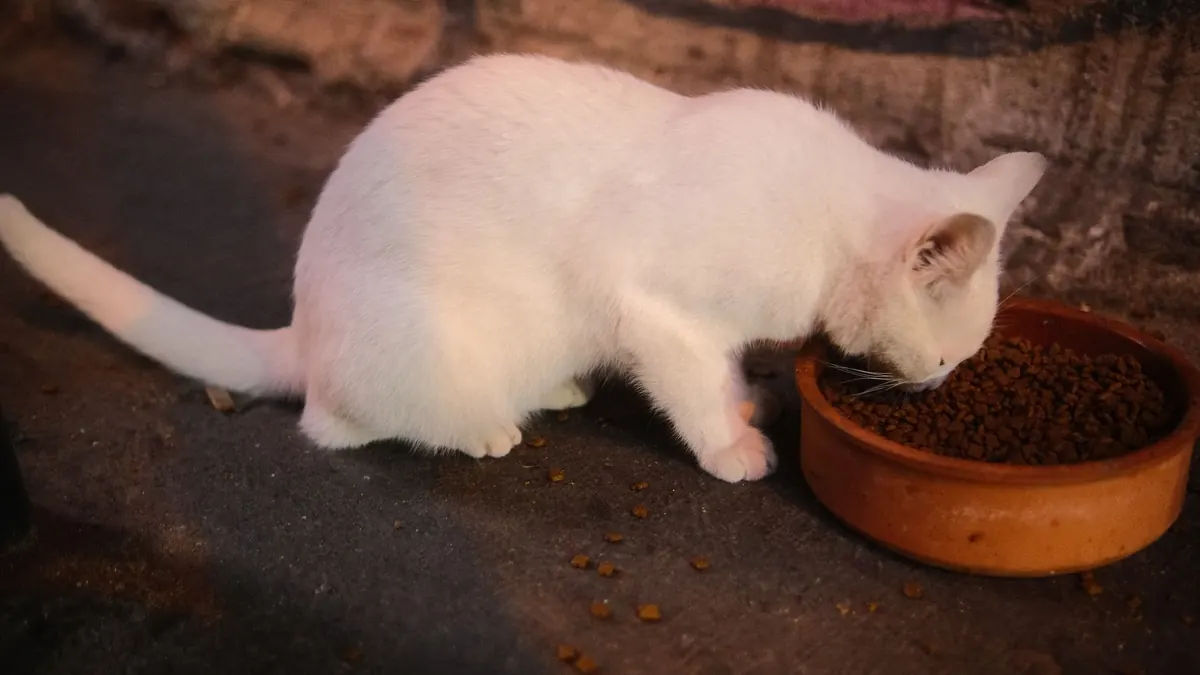
Dry food packs far more calories per ounce. A small handful can equal a whole can. That density is convenient for a lean, active cat and dangerous for a sedentary one, especially when the bowl is left out all day. Measure portions with a kitchen scale or a proper measuring cup. Eyeballing "about a scoop" is how cats gain two pounds in a year.
Matching Food to Your Cat's Life Stage
Kittens under one year
Kittens need calorie-dense, nutrient-rich food and they need to eat often — four small meals a day is reasonable. Wet food suits them well because small mouths handle it easily and the extra moisture supports a growing body. Growth-formula dry food can be left out between meals, but do not let a kitten free-feed indefinitely. Weigh them monthly and adjust.
Adult cats, one to seven years
This is where body condition matters more than food format. An active adult cat can do well on either, or on a mix. A cat who naps eighteen hours a day usually needs portioned meals rather than an always-full bowl.
Senior cats, seven and older
Senior cats often lose their sense of smell and, with it, their appetite. Wet food's aroma and soft texture can keep them eating when kibble loses its appeal. Dental problems and arthritis also make chewing harder. If a senior cat is losing weight, that is a vet conversation, not a food-swap experiment.
Weight, Body Condition, and Portion Control
Run your hands along your cat's ribs. You should feel them easily under a thin layer of padding, and see a waist from above. If you cannot find the ribs, or if there is a sagging belly pouch that swings when they walk, the portion is too big — regardless of what the bag recommends, since bag guidelines are usually generous and based on intact, active animals.
Useful habits:
- Feed measured meals two or three times a day instead of refilling a bowl.
- Weigh your cat monthly on a baby scale, or weigh yourself holding them and subtract.
- Adjust portions in small steps — about ten percent at a time — and recheck after two weeks.
- Count treats. Three or four small treats can be a meaningful share of a cat's daily calories.
- Keep the water bowl wide, clean, and away from the food bowl. Many cats prefer them separate.
When Health Changes the Answer
Certain conditions shift the balance toward wet food or toward a specific prescription formula. Cats with urinary tract problems often benefit from higher water intake, which dilutes urine. Cats with kidney disease frequently need both extra moisture and controlled protein and phosphorus levels. Diabetic cats need carefully timed meals that match insulin. Cats with food allergies or chronic digestive issues may need a limited-ingredient or hydrolyzed diet.
This is the one area where guessing is expensive and sometimes harmful. Prescription and therapeutic diets should come from your veterinarian, not from a forum thread. Ask specifically: does my cat need more moisture, less phosphorus, fewer carbs, or a different protein source? The answer tells you which food to buy.
A food is only "good" if your cat eats it, keeps a healthy weight on it, and your vet is comfortable with it. Everything else is marketing.
The Cost Question
Wet food generally costs more per calorie than dry, sometimes considerably. That gap is real, but the comparison is not always fair. A cat on wet food often eats less dry food, needs fewer dental procedures, and may avoid some costly urinary episodes. If budget is tight, a common compromise is a quality dry food as the base with one or two wet meals a day, rather than stretching a cheap wet food across every meal.
Buy in larger cans if your cat finishes them, watch for sales on your regular formula, and avoid switching brands every week to chase a discount — sudden food changes cause digestive upset.
Mixing Wet and Dry Without Wrecking the Math
Mixed feeding works well, but the calories have to be counted together. If you add a can of wet food and keep the same amount of kibble, you have just increased daily calories by a third.
- Decide your cat's total daily calorie target with your vet, based on weight and activity.
- Split it — for example, half from kibble, half from wet food.
- Measure both. Use the calorie information on the label, not the volume.
- Transition over seven to ten days, mixing increasing amounts of the new food into the old.
Do not leave wet food out for hours, especially in warm weather. Offer it at mealtimes and refrigerate what is left in the can, covered, for up to a day or two.
A Practical Way to Decide
Start with your cat's body condition and any health notes from your vet. If your cat is a healthy weight, drinks well, and eats eagerly, either format can work — choose based on your budget and your schedule. If your cat is overweight, a senior, a poor drinker, or managing a diagnosed condition, lean toward wet food or a vet-guided mix.
Then do the simple test: feed the plan for four to six weeks, weigh your cat, and look at the litter box, the coat, and the energy level. Adjust from there. If weight is dropping, appetite is fading, or litter box habits change, call your vet before you change the food again.
Photo: Eyüpcan Timur / Pexels