Senior Pet Care Checklist: Daily, Weekly, and Monthly Tasks for Aging Dogs and Cats
Senior pets rarely announce that something has changed. A cat who once cleared the kitchen counter starts using a chair as a stepping stone. A dog who pulled you down the block now slows at the corner and looks up. These small shifts are the early signals, and they are much easier to work with when you catch them early. A simple rotation of daily, weekly, and monthly tasks keeps you a step ahead instead of chasing problems, and it gives your vet a clearer picture at every visit.
Daily Care: Watch How They Move
Mobility is the first thing most owners notice, and the easiest to support. A senior dog may still want the long walk but pay for it later with stiffness. Split that walk into two shorter ones, keep them on grass or packed dirt rather than pavement, and let your pet set the pace.
Indoors, hard floors are the enemy. Slipping on tile makes an older dog tense up, and that tension turns into sore hips and a reluctance to get up at all. Runner rugs along the main routes, a mat under the food bowl, and a carpeted path to the back door cost little and make a real difference.
Worth doing every day:
- Wipe down paws after walks and check the pads for cracks or small cuts.
- Lift the water bowl slightly, or switch to a shallow dish, if your dog's neck is stiff in the morning.
- Check nails. Senior pets wear them down less, and long nails change the way the foot lands.
- Offer a padded, draft-free bed. Orthopedic foam helps pets who struggle to stand.
- Do one gentle stretch or a two-minute massage along the back and hind legs, once your vet has confirmed it is appropriate for your pet.
Food, Water, and Medication
Appetite often changes before weight does. Senior pets may need fewer calories as activity drops, but they may also need different protein or mineral levels depending on kidney, heart, or joint health. That is a conversation for your vet, not a guess based on the bag.
Habits that help every day:
- Warm food slightly, never hot, to boost the aroma for pets whose sense of smell has dulled.
- Feed at the same times. Older pets eat better when they know what is coming.
- Keep fresh water in two or three spots, and try a fountain for cats who drink reluctantly.
- Weigh food rather than scooping by eye once appetite or weight shifts.
- Log every dose of medication and supplements. A small notebook beats memory.
If your dog's neck or back is painful, ask your vet before raising the food bowl. Elevated feeding is not right for every dog, and it can raise the risk of bloat in some deep-chested breeds.
Weekly Tasks: Grooming and a Five-Minute Check
Pick one day a week and run the same routine. It takes about five minutes, and it is how most lumps, ear infections, and skin problems get caught while they are still small.
- Weigh your pet on the same scale at the same time of day, and write it down.
- Run your hands over the whole body: under the collar, in the armpits, along the belly, behind the back legs. Feel for new lumps, scabs, or hot spots.
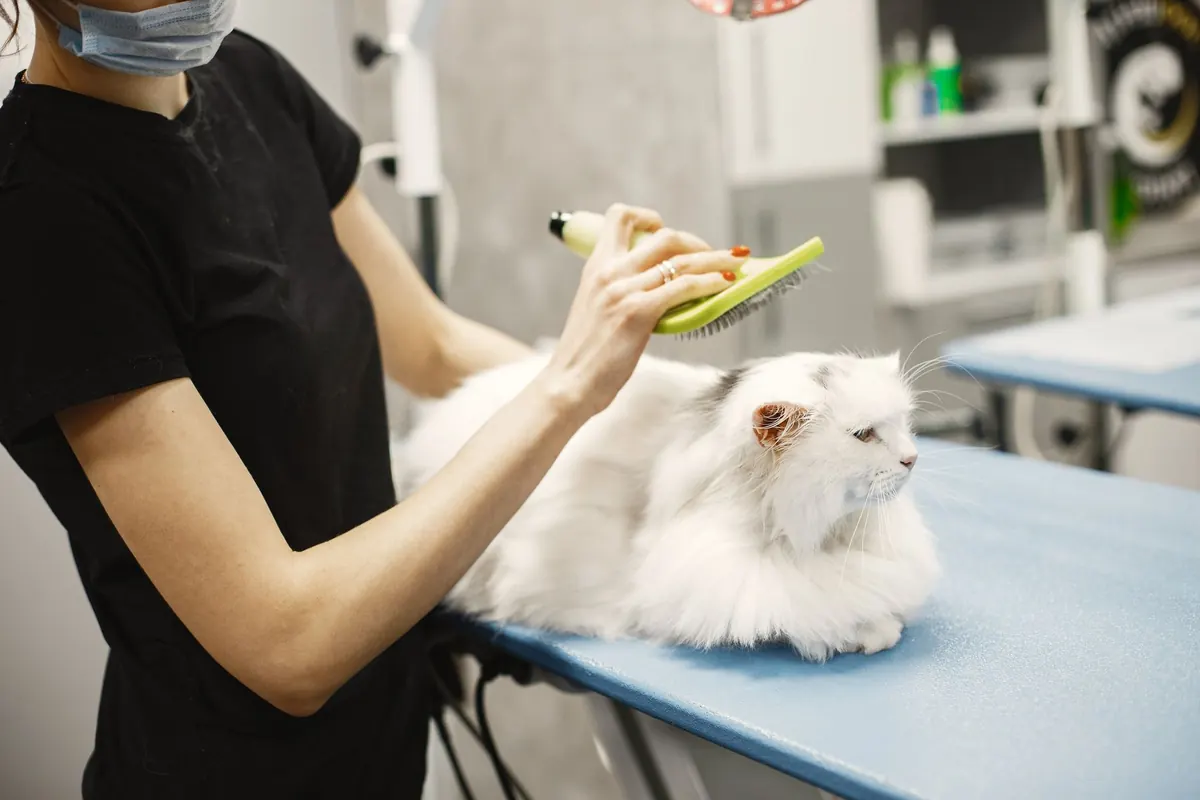
- Brush the coat. Mats hide where your pet can no longer reach, and older cats often stop grooming their lower back.
- Check ears for odor or dark discharge, eyes for redness or cloudiness, and the mouth for loose teeth or bad breath.
- Note bathroom habits: stool, urine, and any accidents inside the house or outside the litter box.
- Trim nails if needed, and wash bedding and washable covers.
If something changes, take a photo or a short video. That is far more useful to your vet than a description two weeks later.
Monthly Tasks: Home Review and Supplies
- Walk the house from your pet's point of view. Any new slippery patches, sharp corners, or furniture in the path?
- Check the fit of harnesses, coats, and collars, since weight changes affect fit quickly.
- Restock medications and check expiration dates on food, treats, and supplements.
- Deep clean water bowls and the litter box. Scratched plastic holds odor, so replace it when it does.
- Confirm ID tags are legible and the microchip registration has your current phone number.
- Add a night light if your pet paces or seems disoriented after dark.
Vet Visits: Every Six Months, Not Every Year
Many vets suggest twice-yearly exams for senior pets, because a year is a long stretch in a life that moves faster than ours. Those visits are also where early kidney, thyroid, dental, and heart changes tend to show up, sometimes in bloodwork before you notice anything at home.
Get more out of the appointment:
- Bring a written list covering appetite, water intake, urination, stool, sleep, stairs, and mood.
- Show the videos you took. Limping and coughing rarely happen in the exam room.
- Ask directly about pain. Cats hide it well, and a stiff cat may simply stop jumping rather than cry.
- Ask what to watch for before the next visit and what warrants a phone call.
Call sooner rather than waiting if a cat stops eating for a day, if either pet strains or struggles to urinate, vomits repeatedly, breathes differently, or suddenly cannot use the back legs. Those are not wait-and-see symptoms. This is general guidance, not veterinary advice; your vet knows your pet's history and should make the call.
Adjust the Plan as Things Change
Senior care is less about a perfect routine and more about small, steady adjustments. What worked in spring may need tweaking by autumn. Keep a simple log of weight, appetite, mood, and any new symptom, and review it before each visit. Let your pet rest more and take longer to warm up. If a daily walk becomes a daily sniff in the yard, that still counts.
Build in some grace for yourself, too. Some days the checklist will not get done. The point is not a perfect record. It is noticing sooner, responding faster, and keeping these years comfortable for the animal that has spent all of them with you.
Photo: Pexels / Pixabay