Grooming Tool Starter Kit for Short-Haired Cats: What You Actually Need
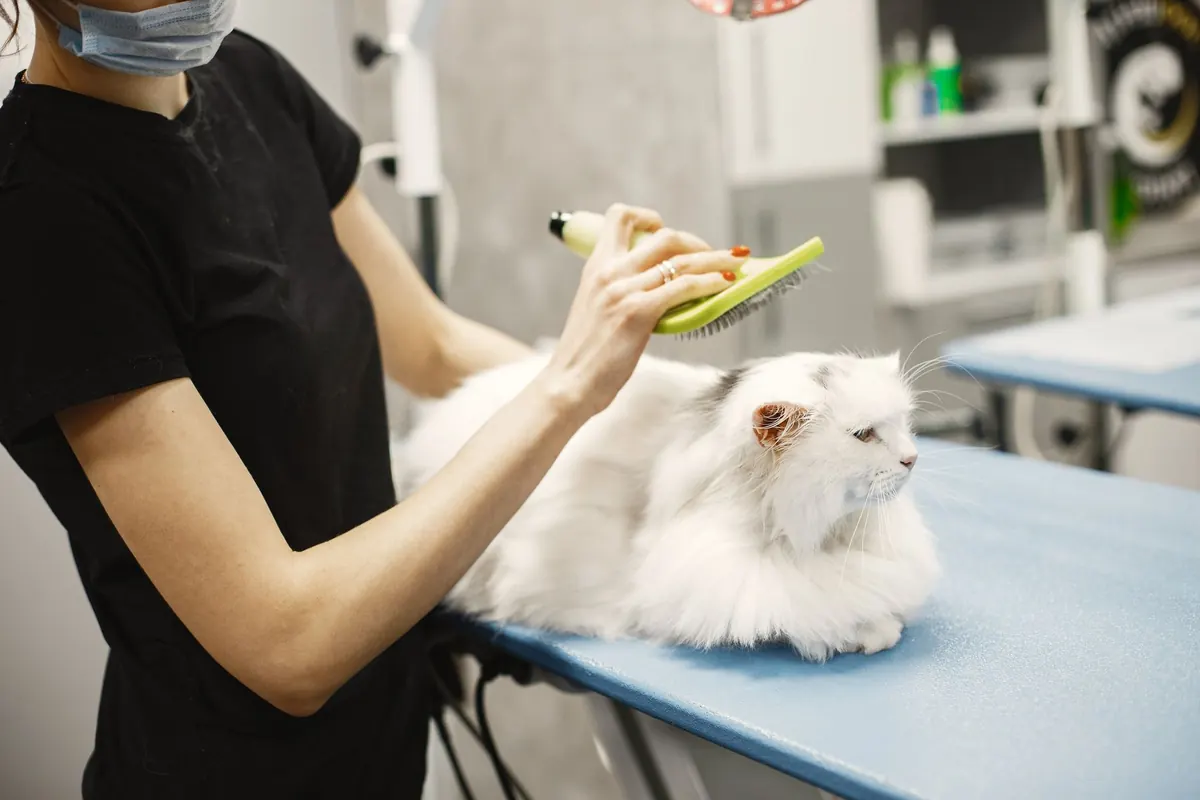
Short-haired cats have a reputation for being wash-and-go. There's truth in it: no matting, no daily brushing, no professional dematting bills. But low maintenance isn't the same as no maintenance. A cat that never gets brushed still leaves loose hair on every cushion, still swallows enough fur to bring up the occasional hairball, and often ends up with a dull, greasy patch along the spine where the coat has stopped renewing itself properly. The good news is that you can cover almost all of it with three or four inexpensive tools and about five minutes a week. Here's what's worth buying, what to leave on the shelf, and how to use it without turning grooming into a wrestling match.
Start With the Coat You Actually Have
"Short hair" covers a lot of ground. A Siamese or an Oriental has a single, fine coat that lies close to the skin and sheds in small amounts. A British Shorthair, Russian Blue, or most domestic shorthairs have a dense double coat with a plush undercoat underneath — that's the coat that sheds in volume and produces the felted clumps you find under the sofa. Those two cats need different kits.
- Fine single coat: a rubber brush, a fine-tooth comb, and nail clippers. That's it.
- Dense double coat: add a slicker brush or a deshedding tool, and use it more often in spring and autumn.
- Senior cats, or cats who have stopped grooming: add unscented wipes and a soft cloth, plus shorter, more frequent sessions.
One warning: kittens can look shorthaired well into their first year. Run your fingers against the direction of the coat. If your fingertips vanish into fluff, plan for a coat that needs more attention than you expected.
The Brush That Does Most of the Work
If you buy one thing, buy a rubber curry brush — the oval kind covered in soft nubs, also sold as a grooming mitt. It's the closest thing to a universal tool for short coats. The nubs reach through the topcoat to lift loose undercoat without scraping skin, and most cats actively enjoy it because it feels like a firm massage.
Technique matters more than the tool. Use short strokes in the direction the coat grows, working from the head back. Then go against the grain on the back and flanks for a minute or two — that's where the undercoat loosens. Finish with the direction of growth again so the coat lies flat.
A boar bristle brush is a nice extra for shine, since it spreads the skin's natural oils down the hair shaft, but it does no real cleaning. It's a finishing tool, not a necessity.
Combs, Slickers, and Deshedding Tools
A fine-tooth flea comb earns its place even in a flea-free house. The teeth are close enough to catch flea dirt, dandruff, and tiny bits of debris, and combing it through the hindquarters and around the neck is a quick weekly health check. Seeing specks that turn rusty red on a damp tissue is a reasonable sign of fleas; talk to your vet about treatment rather than guessing at products.
A metal comb with two tooth spacings handles the places a brush can't reach: behind the ears, the legs, the tail base, the ruff under the chin. These areas collect small tangles that turn into matting if ignored.
A slicker brush — the flat paddle with fine wire pins — is genuinely useful on dense double coats, but use light pressure. Those pins can scratch skin, and cats with thin coats feel them. A deshedding blade or rake strips out a lot of undercoat quickly, which is exactly why it deserves caution: lean in and you'll take topcoat with it. Once a week during heavy shedding, gentle strokes, and stop if the skin looks pink.
Leave these on the shelf: scissors anywhere near the coat (cats have paper-thin skin that cuts easily), and heavy-duty tools designed for thick dog coats.
Nail Clippers: The Part You Can't Skip
Claws grow whether or not hair does. Overgrown claws snag in carpet, curl into the pads, and change the way a cat stands and walks.
Buy small scissor-style clippers with a safety guard, or a plier-style trimmer — both work well on cats. Skip human nail clippers, which can split the claw. Keep styptic powder or plain cornstarch nearby in case you nick the quick.
- Pick a calm moment, ideally after a meal when your cat is sleepy.
- Hold a paw and press the pad gently so a claw extends.
- Look for the quick: a pink core visible inside pale claws. On dark claws, check the underside for a darker, solid area near the base.
- Trim only the clear, curved tip — a couple of millimetres. Small cuts are safer than ambitious ones.
- Do one paw and stop if your cat has had enough. Treats afterwards, every time.
- Spread the rest over the next few days rather than forcing all four paws at once.
Every two to three weeks is typical for indoor cats. If you're unsure, ask your vet or a groomer to demonstrate once; it's a five-minute lesson. If a claw is broken, bleeding heavily, or your cat is limping, that's a vet visit, not a grooming problem.
Wipes and Small Extras
Unscented pet wipes are useful for the greasy patch some cats develop at the tail base, and for older cats who no longer reach their hindquarters. Avoid human wipes containing fragrance, alcohol, or essential oils — cats groom themselves by mouth, and some of those ingredients are toxic to them. A damp microfiber cloth does the same job for nothing.
Add a soft toothbrush or finger brush for the face, used gently away from the eyes, and a few cotton pads for eye crusties. Only use an ear cleaner if your vet has recommended one, and never pour anything into an ear on your own. Then find a small box or basket for everything. A kit that lives on a shelf gets used; one buried in a cupboard doesn't.
The Five-Minute Weekly Routine
Front to back, always in the same spot. Two or three minutes with the rubber brush. A pass with the comb over the legs, tail, and behind the ears. A quick claw check — trim whatever needs it. Wipe the eyes and rear if they need it. Then treats, and let your cat walk away on their own terms. That last part is what makes next week easy.
Increase brushing to every other day during the spring and autumn shed, and keep sessions short — two minutes beats ten. If you notice bald patches, scabs, constant scratching, dandruff, or a coat that has suddenly gone dull or greasy, that's a conversation with your vet rather than a reason to buy another brush. Tools handle the surface. The rest is health.
Photo: Gustavo Fring / Pexels